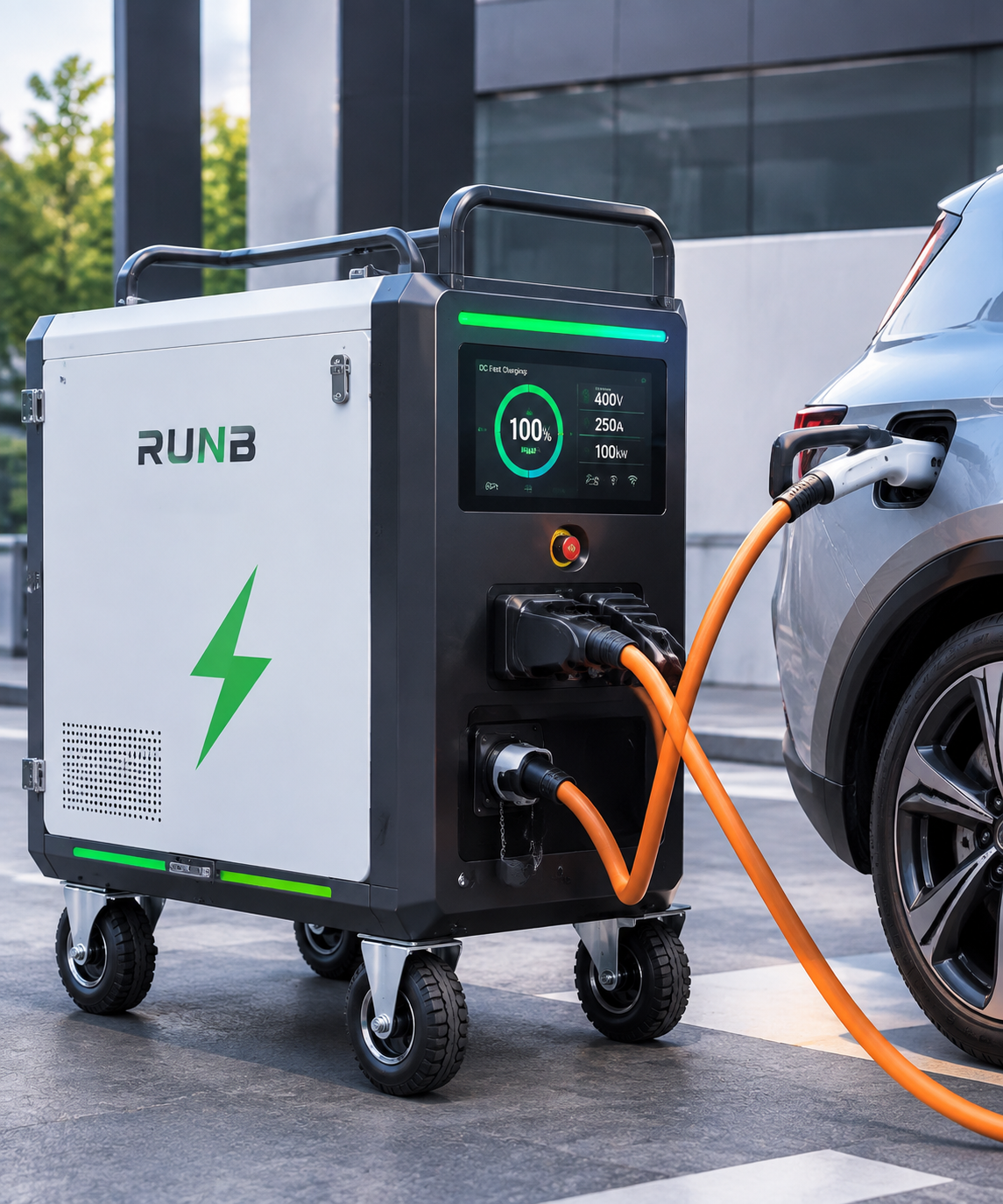
One Core Energy Module, Five EV Charging Solutions: How Mobile Storage Is Reshaping the EV Ecosystem
Mobile Energy Storage Charging System: A Modular Platform Behind the Future of EV Infrastructure
The rapid growth of electric vehicles is exposing the limitations of traditional fixed charging infrastructure.
Although fixed charging stations remain essential, they often require complex installation procedures, grid upgrades, construction permits, and significant upfront investment. For many locations — from residential areas to emergency services, fleets, and commercial charging operators — a more flexible solution is needed.
This is where mobile energy storage charging systems create new possibilities.
Built on a modular architecture combining battery storage, power conversion technology, intelligent energy management, and charging modules, one core energy platform can evolve into multiple EV charging solutions.
From portable DC fast chargers to home solar charging systems, roadside rescue power stations, integrated energy storage charging stations, and autonomous charging robots, this technology is reshaping how electricity reaches electric vehicles.
In this article, we will explore how one modular energy system can support five different applications and why it may become a key component of future EV charging infrastructure.
1. Portable DC Fast Charger: Flexible Charging Without Infrastructure Limitations
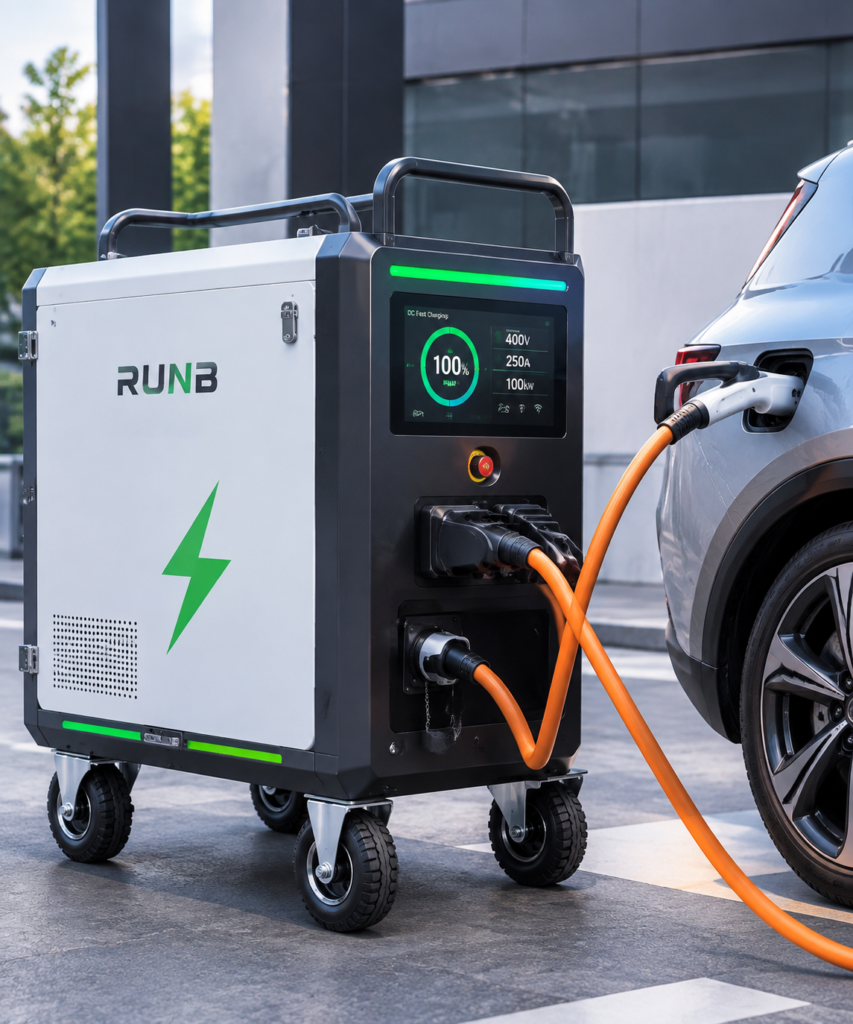
Traditional EV charging stations usually require professional installation teams, electrical engineering assessment, grid connection approval, and construction work.
For many businesses, these requirements create barriers:
- Long deployment time
- High installation costs
- Limited charging locations
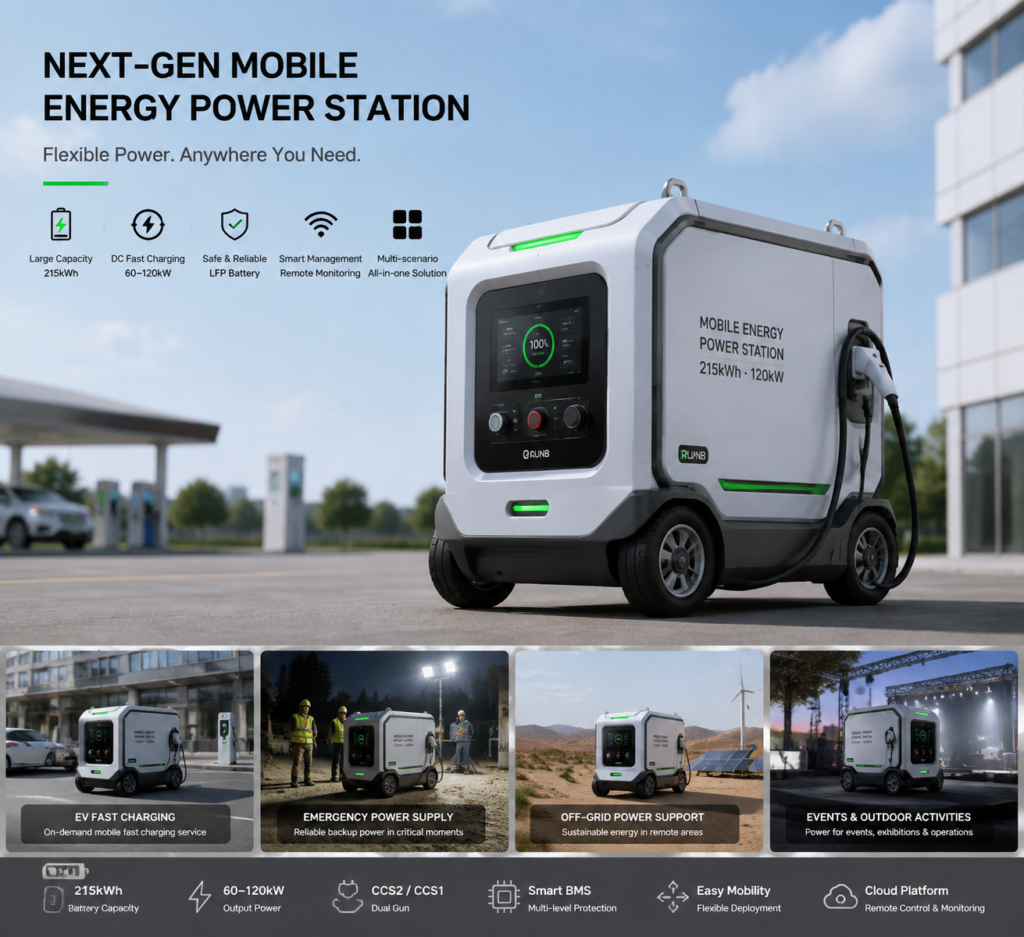
A portable DC fast charger solves these challenges by integrating a compact AC-DC power conversion system into a movable charging platform.
With a typical output range of 30kW–80kW, it can support most passenger EV models and commercial vehicles.
The biggest advantage is simple:
Deploy in hours, not weeks.
After receiving the equipment, users only need access to a suitable power source. No complicated construction process is required.
Key Advantages
| Feature | Fixed Charging Station | Portable DC Fast Charger |
|---|---|---|
| Installation | Requires professional installation | Plug-and-use |
| Deployment Time | Weeks or months | Hours |
| Mobility | Fixed location | Flexible deployment |
| Infrastructure Cost | High | Lower investment |
| Application | Permanent charging sites | Multiple scenarios |
Typical Applications
EV Repair Shops and Dealerships
Repair centers often need temporary charging capability for vehicle testing, maintenance, and customer services.
A portable DC charger becomes a valuable workshop tool without requiring permanent charging infrastructure.
Fleet Maintenance Facilities
Commercial fleets can deploy mobile chargers according to operational demand without modifying existing electrical systems.
Temporary Events and Emergency Support
For exhibitions, outdoor activities, and temporary charging demand, portable charging provides a fast response solution.
2. Home Energy Storage DC Charger: Solar Energy Meets Smart EV Charging
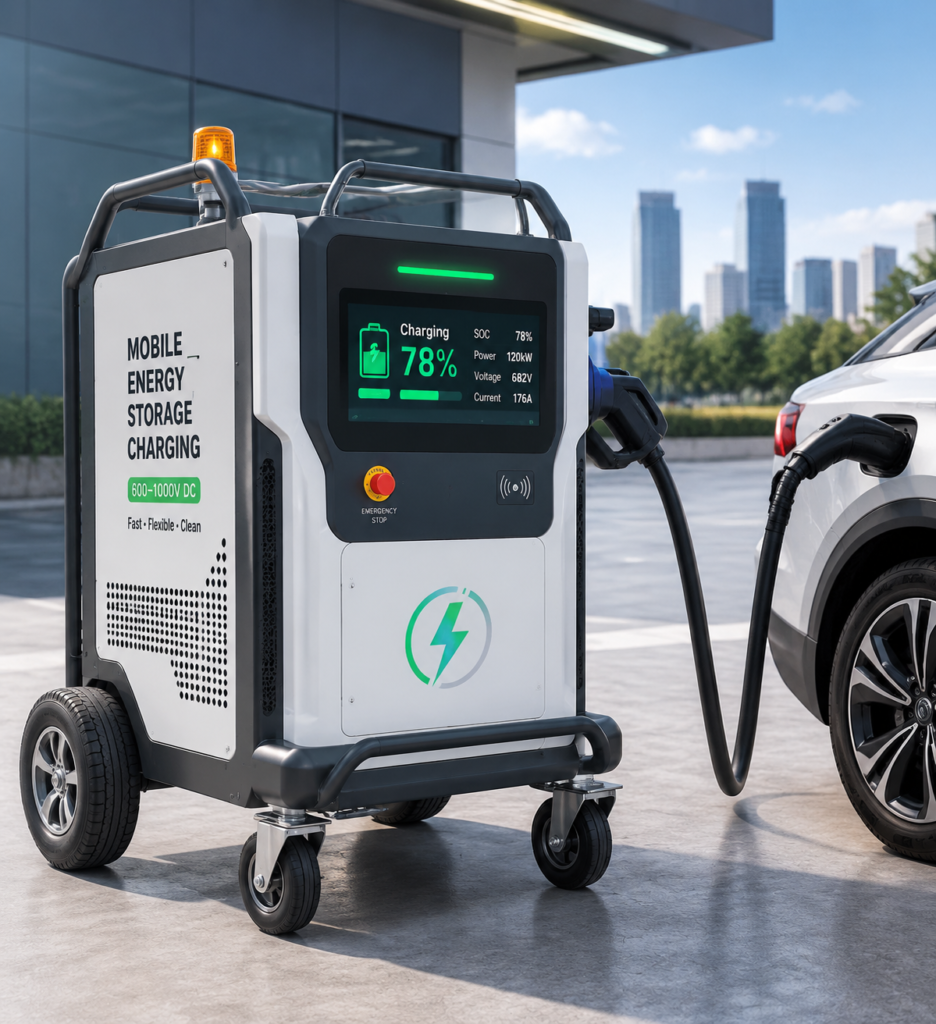
The second application combines a DC charger with a compact energy storage battery system.
Unlike conventional home chargers that directly consume grid electricity, this solution allows homeowners to manage energy more intelligently.
It is especially suitable for households that already have photovoltaic solar systems.
Solar Self-Consumption: Store Daytime Energy, Charge at Night
During the daytime:
Solar panels generate electricity.
Instead of sending unused power back to the grid, excess solar energy can be stored inside the battery system.
At night:
The stored clean energy can be used to charge the electric vehicle.
This creates a complete renewable energy cycle:
Solar Generation → Energy Storage → EV Charging
Peak Shaving With Time-of-Use Electricity Pricing
In regions with different electricity prices throughout the day, the system can also optimize charging costs.
During low-price periods:
The battery charges from the grid.
During high-price periods:
Stored energy powers the EV.
This reduces electricity expenses while improving energy efficiency.
Ideal Users
- Homes with existing solar systems
- EV owners looking for energy independence
- Users in areas with unstable electricity prices
- Green lifestyle adopters
Compared with traditional residential chargers, this solution transforms EV charging from simple electricity consumption into intelligent energy management.
3. EV Roadside Rescue Power Station: The Future Emergency Equipment for Electric Vehicles
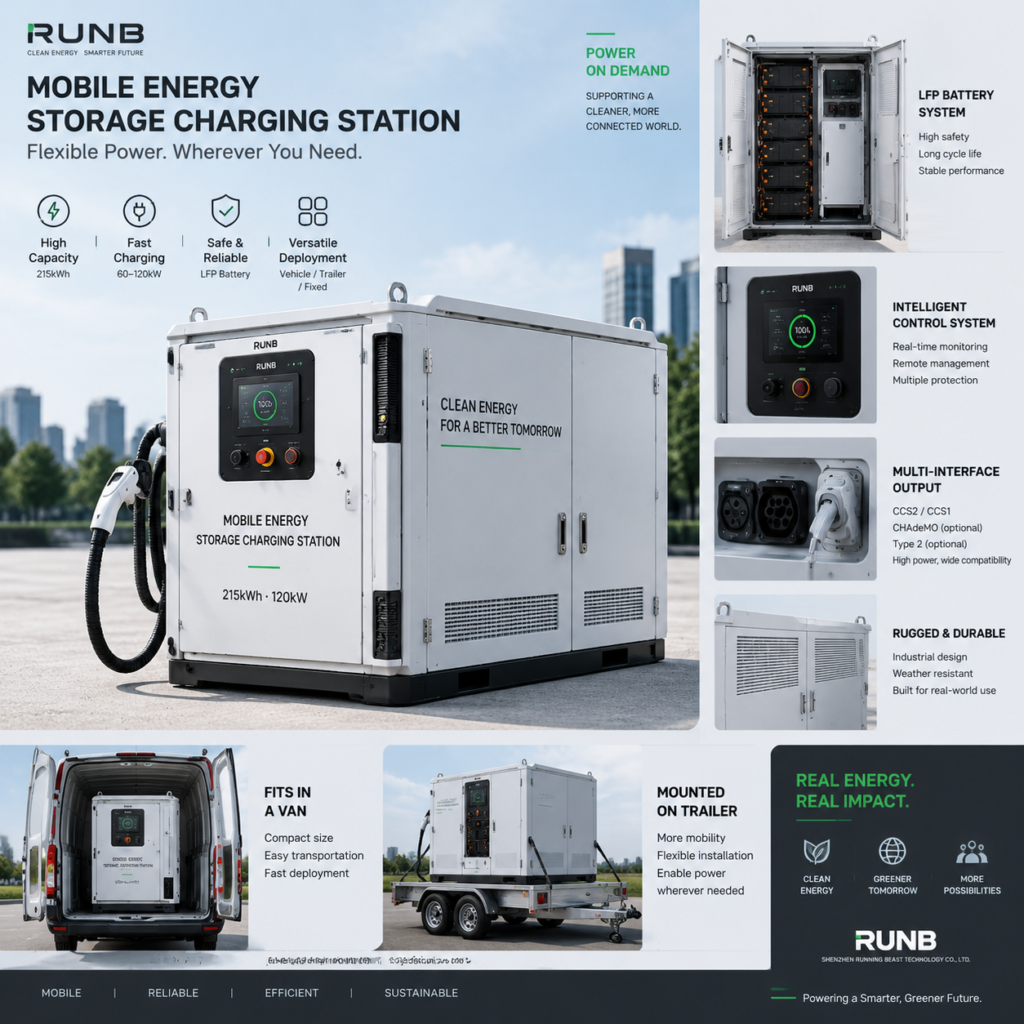
As electric vehicle adoption increases, roadside rescue requirements are also changing.
Traditional fuel vehicles can carry gasoline or diesel.
Electric vehicles require a completely different rescue approach.
A mobile energy storage rescue station provides a dedicated solution.
Two Flexible Deployment Methods
Vehicle Integrated Rescue Unit
The energy storage charging system can be installed into a rescue vehicle.
The rescue team can directly provide emergency charging services wherever needed.
Trailer-Mounted Rescue Station
The system can also be installed on a trailer platform.
This allows flexible transportation between different service areas.
Typical Performance
Depending on battery capacity and output configuration, the system can provide:
- Emergency DC charging service
- Temporary roadside power support
- Multiple rescue operations per day
A single rescue session can provide enough energy to recover approximately 50–100 km of driving range for many EV models.
Recharge Methods
The rescue power station itself can be replenished through:
- AC charging
- DC fast charging
- Renewable energy sources such as solar (when configured)
Application Scenarios
- Highway emergency services
- Automotive insurance rescue networks
- EV manufacturer roadside assistance
- Municipal emergency fleets
As EV adoption grows, mobile rescue charging will become an essential part of future transportation infrastructure.
4. Integrated Energy Storage Charging Station: Creating an Intelligent Solar-Storage-Charging System
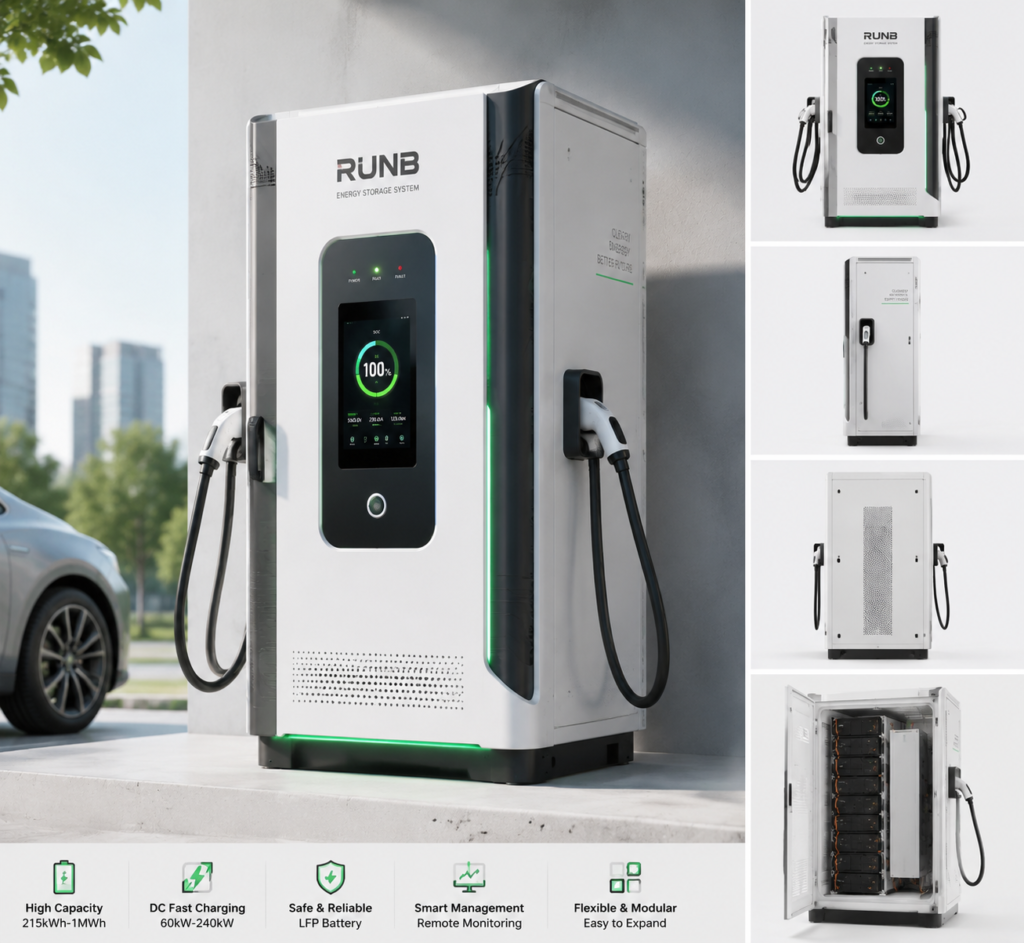
The fourth application represents a larger commercial-scale solution.
Unlike residential energy storage chargers designed for individual users, integrated energy storage charging stations are designed for:
- Commercial charging operators
- Parking facilities
- Industrial areas
- Locations with limited grid capacity
Energy Storage + Charging + Renewable Energy Integration
The system combines:
- Battery energy storage
- DC fast charging modules
- Solar photovoltaic systems
- Intelligent energy management
Creating a complete:
Solar + Storage + Charging Ecosystem
Solving Weak Grid Problems
Many regions face challenges such as:
- Limited electrical infrastructure
- Expensive grid upgrades
- Insufficient power capacity
The integrated system provides a smarter approach.
By combining grid power and battery energy storage, the charging station can deliver higher charging output without immediately expanding grid capacity.
Commercial Benefits
Peak Shaving
Energy can be stored when demand is low and released during peak periods.
Demand Charge Reduction
Businesses can reduce electricity demand costs by controlling power consumption.
Improved Charging Availability
Operators can provide faster charging services even in locations with limited grid capability.
Residential vs Commercial Difference
| Home Storage Charger | Commercial Storage Station | |
|---|---|---|
| Battery Capacity | 5–15kWh | 100kWh+ |
| Users | One household | Multiple vehicles |
| Power Supply | Residential electricity | Commercial three-phase power |
| Main Purpose | Energy independence | Charging business optimization |
5. Autonomous Mobile Charging Robot: Bringing Energy Directly to Vehicles
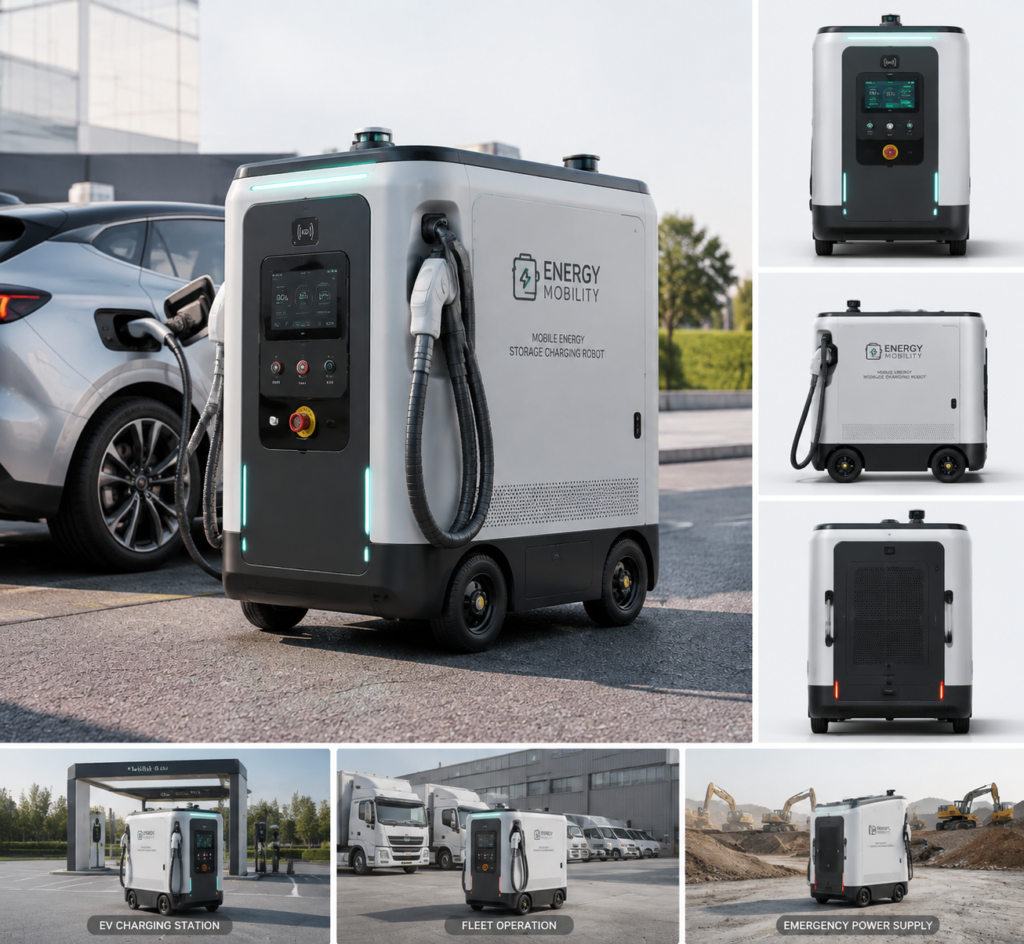
The same battery and power conversion platform can be integrated with autonomous mobility technology.
By adding:
- Navigation systems
- AI scheduling software
- Sensors and cameras
- Autonomous driving technology
the energy module becomes an intelligent mobile charging robot.
How It Works
Users can request charging service through a mobile application.
The charging robot receives the task and automatically travels to the target vehicle.
After completing the charging service, it returns to the energy station for recharging.
This creates a new charging model:
Energy moves to vehicles instead of vehicles searching for chargers.
Future Applications
Commercial Parking Facilities
Charging robots can serve vehicles without requiring every parking space to have a dedicated charger.
Highway Service Areas
Dynamic charging deployment improves charging efficiency during peak periods.
Ports and Industrial Campuses
Autonomous charging can support logistics vehicles and special-purpose EV fleets.
The Future Direction
Although fully autonomous charging technology is still developing, the combination of mobile energy storage and intelligent robotics creates a new direction for EV infrastructure.
The future charging network will become more flexible, intelligent, and user-oriented.
Conclusion: The Future of EV Charging Is Modular, Mobile, and Intelligent
Fixed charging stations will continue to play an important role in EV infrastructure.
However, they are no longer the only solution.
The next generation of EV charging will focus on:
- Mobility
- Modularity
- Intelligent energy management
- Renewable integration
One core energy module can become multiple products:
Portable charger.
Home energy system.
Roadside rescue equipment.
Commercial storage charging station.
Autonomous charging robot.
For equipment manufacturers, fleet operators, and energy service providers, the question is no longer whether mobile energy storage charging will become important.
The real question is:
Which application should be deployed first?
What is a mobile energy storage charging system?
How powerful is a portable DC charger?
Can mobile EV chargers work without a strong grid?
Can solar energy be integrated with mobile EV chargers?

Contact Sales
Request Your Free Customized Quote
Book a Charging Station Demo
Get Tailored EV Charging Solutions
Discover Partnership Opportunities
Access Industry Insights & Best Practices
Phone: +86 188 1902 7869
WeChat: 18819027869