
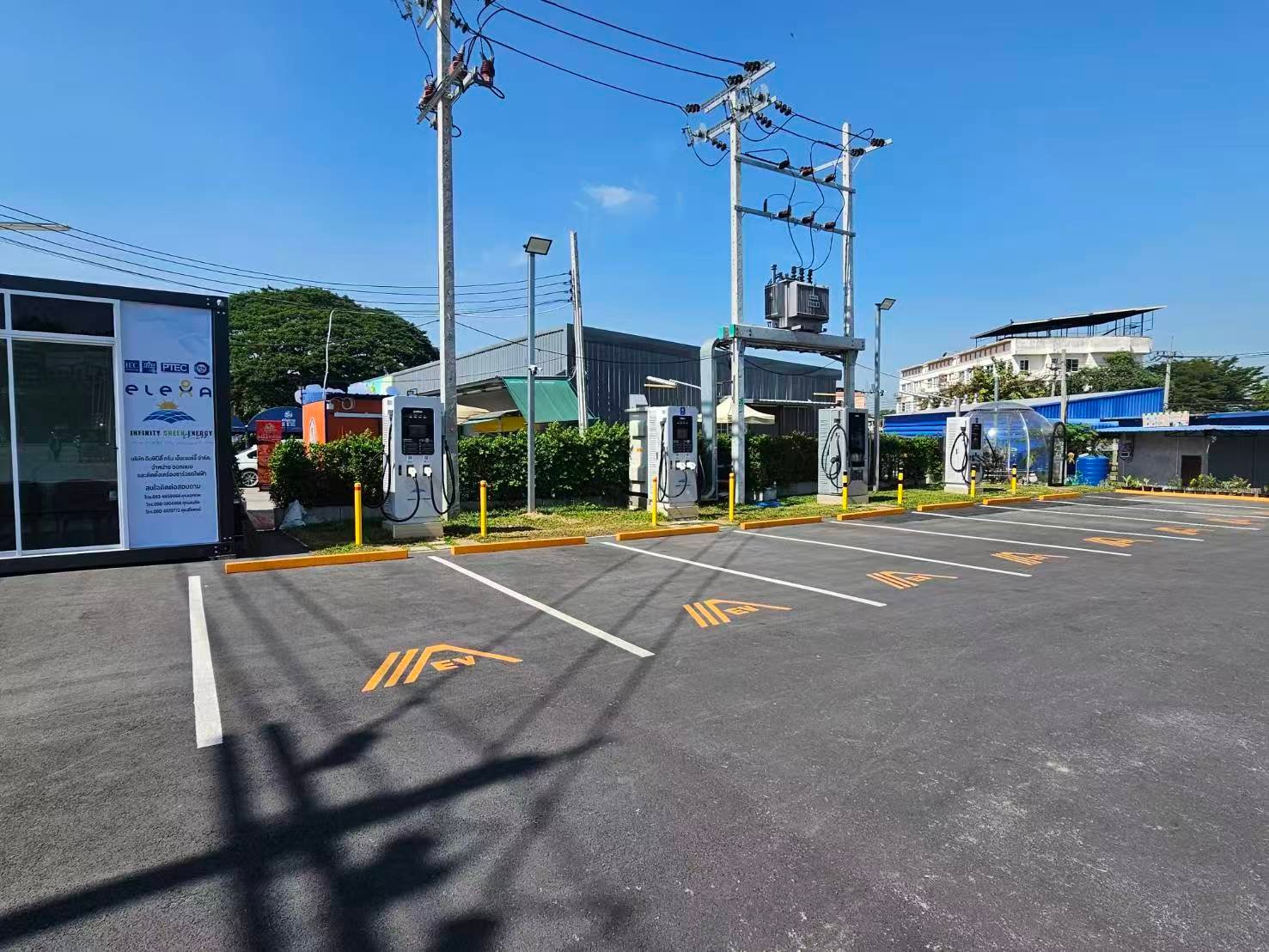
Commercial DC fast charging station project in Bangkok Thailand
Thailand’s EV Charging Market Is Expanding Rapidly
Thailand is rapidly becoming one of Southeast Asia’s most important EV markets. Supported by the government’s “30@30” EV policy, the country aims for electric vehicles to account for 30% of total vehicle production by 2030. Public charging infrastructure demand has increased significantly across Bangkok and other major cities.
In Bangkok, the growth of EV ownership has accelerated charging demand in commercial parking areas, taxi routes and gas station locations. However, fast charging infrastructure is still insufficient in many high-traffic urban districts, creating strong demand for reliable DC fast charging deployment.
This project was developed to address these growing commercial charging needs in Bangkok while preparing for Thailand’s future high-power charging market.
Why the Customer Decided to Build This Charging Station
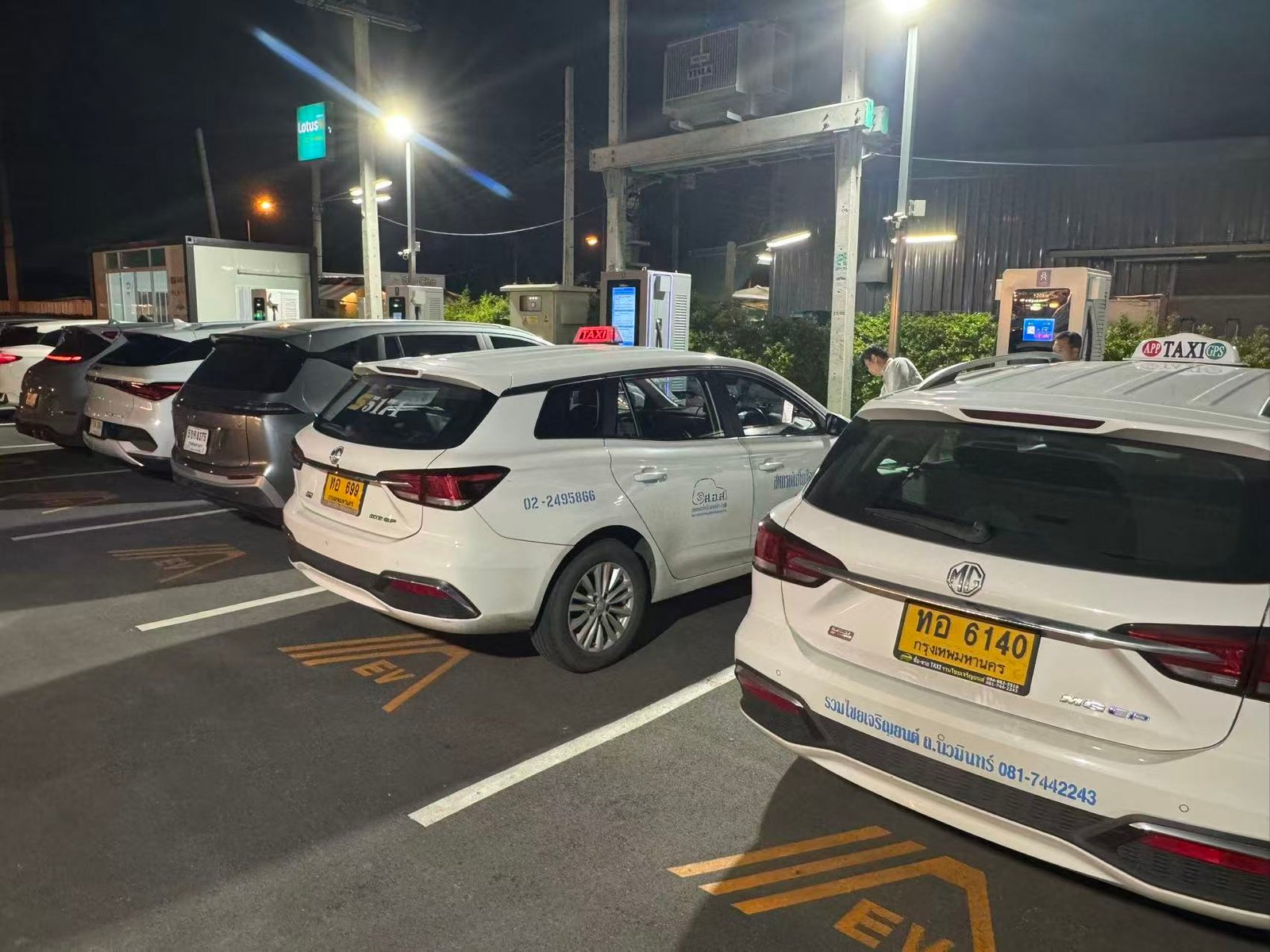
The project owner identified a major opportunity in Bangkok’s rapidly growing EV charging market.
Over the past two years, EV adoption in Thailand has increased significantly, especially among taxi operators, private EV owners and commercial fleets. However, public DC fast charging infrastructure remains limited in many parts of Bangkok.
The customer already owned a commercial site with an existing 800kVA transformer, providing a significant deployment advantage. Since no additional transformer upgrade was initially required, the project could reduce construction costs and accelerate deployment timelines.
The charging station also transformed underutilized commercial land into a long-term revenue-generating asset through:
- EV charging services
- Parking fees
- Commercial traffic attraction
- Future advertising opportunities
Most importantly, early deployment allows the operator to secure a strategic charging location before Bangkok’s charging infrastructure becomes highly competitive.
Thailand’s government policies and EV infrastructure incentives also supported the project’s long-term investment value. Thailand aims to become Southeast Asia’s EV manufacturing and deployment hub through its national EV roadmap.
We Main Deployment Challenges
1. Transformer Capacity Limitation
The customer planned to deploy four DC fast chargers with a combined maximum power output of 720kW.
This created significant pressure on the existing transformer capacity and raised concerns regarding grid stability during simultaneous charging sessions.
Without intelligent power management, peak charging demand could exceed the transformer’s safe operating margin.
2. Thailand Utility Approval & Electricity Pricing
Passing the Thailand electricity authority approval process was one of the project’s most critical challenges.
The operator needed to qualify for preferential EV charging electricity pricing instead of higher industrial electricity rates. This directly impacted long-term charging station profitability and ROI.
The project required:
- Compliance testing
- Charging communication validation
- OCPP compatibility
- Electrical safety approval
- Utility inspection support
3. Tropical Climate Challenges
Thailand’s hot and rainy climate creates major operational challenges for outdoor charging infrastructure.
High ambient temperatures can reduce charging efficiency and increase thermal stress on charging equipment and vehicle batteries.
Heavy rainfall and drainage issues may also create flooding risks for outdoor charging stations.
To improve operational reliability, the deployment design included:
- Optimized ventilation
- Waterproof structural protection
- Outdoor thermal management
- Stable cable management
- Rain-resistant equipment positioning
4. Charging Platform Integration
The customer evaluated multiple local SaaS charging platform providers in Thailand.
RUNNING-BEAST engineers worked together with the customer to perform multiple hardware and software compatibility tests to ensure stable OCPP communication and long-term platform operation.
Why We Chose a Mixed 120kW + 240kW Charging Configuration
Instead of deploying only high-power chargers, RUNNING-BEAST designed a mixed charging configuration using both 120kW and 240kW DC fast chargers.
This approach was based on Thailand’s current EV market conditions and future charging demand growth.
Why 120kW Chargers Were Important
Most EVs currently operating in Thailand can fully utilize 120kW charging power.
120kW chargers provide:
- Lower infrastructure pressure
- Better transformer compatibility
- Lower deployment cost
- Stable charging efficiency
- Faster ROI for operators
Why 240kW Chargers Were Also Included
Thailand’s EV market is evolving rapidly, especially with the increasing presence of newer Chinese EV models capable of higher charging power.
240kW chargers prepare the site for:
- Future high-power EV adoption
- Reduced charging waiting time
- Commercial fleet charging
- Highway charging demand growth
Intelligent Load Balancing System
To prevent transformer overload during simultaneous charging sessions, RUNNING-BEAST implemented intelligent load balancing management.
The system dynamically distributes charging power between chargers based on real-time usage conditions.
This approach helped:
- Protect transformer capacity
- Improve charging stability
- Reduce peak grid pressure
- Optimize energy efficiency
- Improve station profitability
Engineering Support & OCPP Integration
RUNNING-BEAST engineers participated throughout the entire deployment process including:
- Installation guidance
- Charger commissioning
- OCPP communication testing
- Platform integration
- Utility inspection support
- Final system optimization
Our engineering team also assisted the customer in completing OCPP 1.6J integration and utility approval procedures required for commercial charging operation.
The project successfully passed Thailand utility approval requirements and obtained preferential electricity pricing for EV charging operation.
This significantly reduced long-term operational electricity costs compared with standard industrial electricity tariffs.
Project Results After One Year of Operation
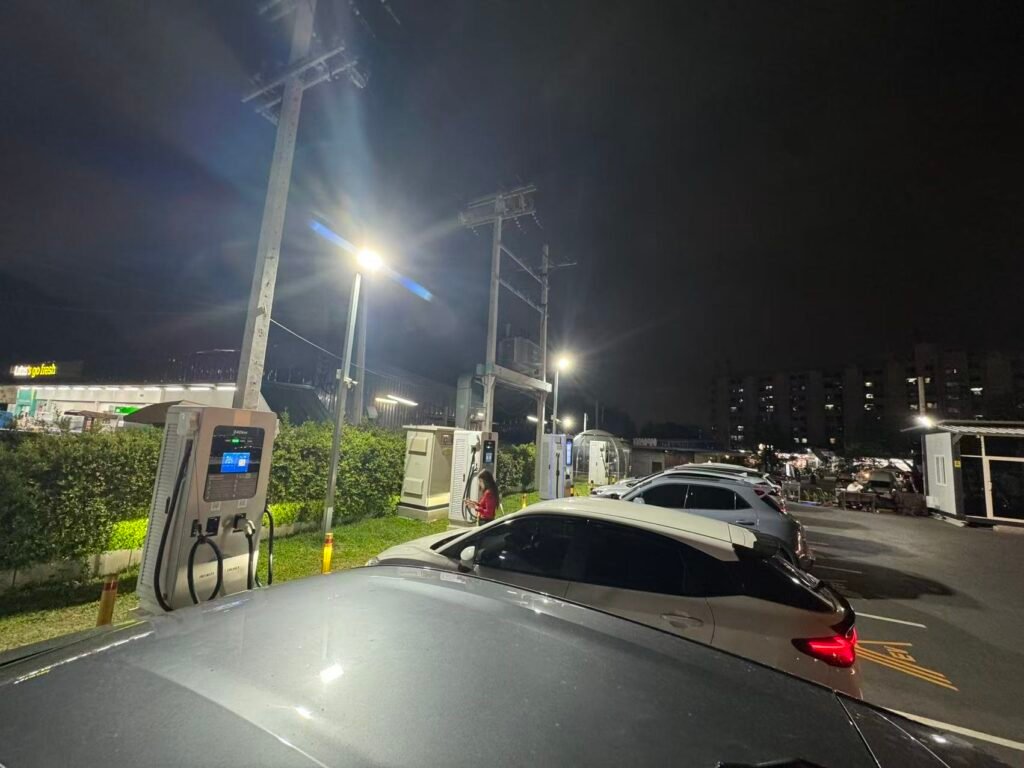
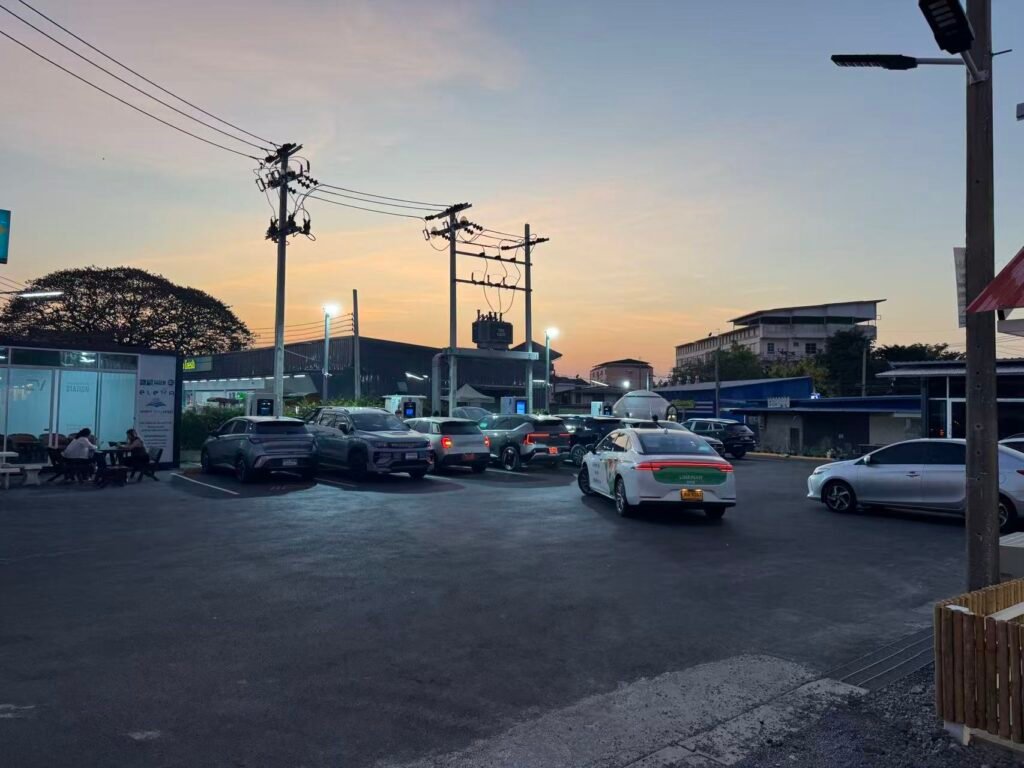
After one year of continuous operation, all four DC fast chargers remain in stable commercial service without major downtime.
Operational Results
- Average daily charging sessions (April): 112
- Peak daily charging sessions: 300
- Monthly electricity cost savings: approximately RMB 6,000
- Stable operation for over 1 year
- Successful utility approval and preferential electricity pricing
The intelligent load management system significantly improved operational efficiency while reducing transformer pressure during peak usage periods.
The project has become a successful example of commercial DC fast charging deployment in Thailand’s rapidly growing EV market.
Why RUNNING-BEAST Was Selected
RUNNING-BEAST was selected because of its engineering-driven charging solution capability for emerging markets.
Unlike standard assembly suppliers, RUNNING-BEAST develops its own controller board technology, enabling:
- Better charging system stability
- Flexible OEM customization
- Faster troubleshooting
- Localized deployment optimization
- OCPP integration support
Our engineering team also provides installation guidance, commissioning support and on-site deployment assistance for commercial charging projects.
This project demonstrates how engineering capability, intelligent power management and localized deployment support can significantly improve the success rate of EV charging infrastructure projects in emerging markets.
Planning a Commercial EV Charging Project in Thailand or Southeast Asia?
The most suitable charger power in Thailand depends on EV adoption levels, grid infrastructure and commercial charging scenarios.
For most urban commercial charging projects in Thailand, 80kW and 120kW DC fast chargers currently provide the best balance between charging speed, infrastructure cost and transformer capacity requirements. These power levels are widely suitable for shopping malls, gas stations and commercial parking applications.
However, higher-power chargers such as 240kW systems are becoming increasingly important as newer EV models with larger battery capacity and faster charging capability enter the Thai market. Many operators are now adopting mixed-power deployment strategies to balance current operational efficiency with future charging demand growth.
Load balancing helps prevent transformer overload during simultaneous charging sessions.
In commercial charging stations, multiple DC fast chargers operating at full power can create extremely high peak electricity demand. Without intelligent power management, this may exceed the transformer’s safe operating capacity and increase operational risks.
RUNNING-BEAST intelligent load balancing systems dynamically distribute charging power based on real-time charging demand and transformer conditions. This approach helps:
- Reduce peak grid pressure
- Improve transformer safety
- Maintain charging stability
- Optimize energy efficiency
- Lower infrastructure upgrade costs
Load balancing is especially important for emerging markets where grid capacity may be limited or unstable.
OCPP compatibility allows charging stations to integrate with third-party charging management platforms and operator systems.
For commercial charging operators, OCPP support is essential for:
- Remote charger monitoring
- Charging session management
- User payment systems
- Dynamic pricing control
- Operational data analysis
- Multi-site charger management
OCPP-compatible chargers also provide greater platform flexibility, allowing operators to choose local SaaS providers without being locked into a single hardware ecosystem.
In Thailand and other emerging EV markets, OCPP integration is becoming increasingly important as operators expand charging networks and commercial charging services.
Electricity pricing is one of the most important factors affecting EV charging station profitability in Thailand.
Commercial charging operators can reduce electricity costs through several methods:
- Applying for EV-specific utility electricity pricing
- Optimizing transformer utilization
- Using intelligent load balancing systems
- Reducing peak power demand
- Improving charging efficiency
- Scheduling charging during lower-demand periods
In this Bangkok project, RUNNING-BEAST engineers assisted the customer with utility approval procedures and OCPP integration testing, helping the charging station qualify for preferential EV charging electricity rates.
The intelligent load management system also reduced transformer pressure and improved overall operational efficiency, contributing to significant monthly electricity cost savings.